Showing posts with label facts. Show all posts

Monday, January 16, 2006

Easter Egg

An Easter Egg is a hidden feature or novelty that the programmers have put in their software. In general, it is any hidden, entertaining thing that a creator hides in their creation only for their own personal reasons. This can be anything from a hidden list of the developers, to hidden commands, to jokes, to funny animations. You'd be surprised just how many things contain Easter Eggs... just look at the list that has accumulated here!

A true Easter Egg must satisfy the following criteria:
1. Undocumented, Hidden, and Non-Obvious
An Easter Egg can't be a legitimate feature of a product, or be an obvious part of a storyline. Easter Eggs will usually stand out either because they totally don't fit with their context (like a pinball game in a word processor), or because they have a deeper hidden personal meaning to the creators, so they threw it in for entertainment.

2. Reproducible
Every user with the same product or combination of products must be able to produce the same result given the instructions. If others can't reproduce an Egg, then it doesn't belong in this archive.

3. Put There by the Creators for Personal Reasons
The Egg must have been put there on purpose, and furthermore have a personal significance to the creators beyond just making a better product (movie, TV show, software program, etc).

4. Not Malicious
Easter Eggs are there for fun, not to do damage.

5. ENTERTAINING!
The most important element... if it's not there for entertainment, it's not an Egg.

Have a look at Easter Egg Archive

Monday, November 28, 2005

A1 Grand Prix Facts

A1 Grand Prix is the first opportunity in any area of motorsport for nations to compete on a level playing field. It is a series where technology and innovation are deliberately equalised and performance is determined by human bravery, skill and excellence. Team and driver combine to create their advantage and the winning nation raises its flag in celebration.

Meaning
The name 'A1' encapsulates the two key aspects of the World Cup of Motorsport, unity and excellence. The letter 'A', being the first letter of the majority of the world's continents (Africa, North America, South America, Asia, Australasia, Antarctica and Europe) represents the world and its population. The number '1' signifies the unity between them -- All as One, One World.

Point System
- Sprint Race

The average (based on aggregate) of the best two lap times will determine the grid for the sprint race which will be a rolling start. The sprint race will be between 20 and 30 minutes long.
1st place will receive 10 points
2nd place will receive 9 points
3rd place will receive 8 points
4th place will receive 7 points
5th place will receive 6 points
6th place will receive 5 points
7th place will receive 4 points
8th place will receive 3 points
9th place will receive 2 points
10th place will receive 1 points
The results of the sprint race will determine the grid for the feature race.

- Feature Race
The results of the sprint race will determine the grid for the feature race. The feature race will be between 45 and 60 minutes.
1st place will receive 10 points
2nd place will receive 9 points
3rd place will receive 8 points
4th place will receive 7 points
5th place will receive 6 points
6th place will receive 5 points
7th place will receive 4 points
8th place will receive 3 points
9th place will receive 2 points
10th place will receive 1 points
One point will be allocated to the fastest lap achieved by a team during the sprint race or feature race.

Thursday, October 27, 2005

Hoax

It is quite some time that I didn't updated my blog. Too busy with my programming stuff and have to get feed back from the user whether they like the program that I wrote. Nothing much to say, I just want to recommend a website that is worth to read. How many e-mails that you receive daily? Probably five? ten? No matter how many e-mails that you received, most e-mails that you received from friends are actually hoax. This website can tell you whether the e-mails you received are hoax or real situation. you will also find that some e-mails that you received are exactly the same (word by word) just like in the website.

http://www.hoax-slayer.com/email-hoax-archive.html

Try to read this website and I sure you will be amused for hours. Hope you all can gain useful knowledge today. I have to start my work now. Bye.

Friday, September 30, 2005

The Top 15 Skylines in the World

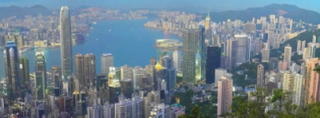
1. Hong Kong, China
Hong Kong is number one for many reasons: Hong Kong has a whopping 39 buildings over 200 metres tall. It also boasts four of the 15 tallest buildings in the world… that's all in one city! Hong Kong’s skyline shows a large selection of distinct sky-reaching towers, with beautiful night lighting and reflection. This city exemplifies the post-modern skyscraper and skyline. Finally, the mountain backdrop makes this skyline (as you can clearly see) the greatest on the planet! Metro/Urban Population: 6.8 million


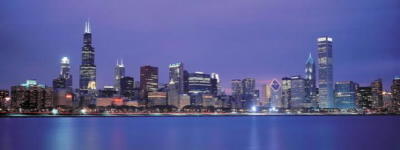
2. Chicago, USA
Chicago is the birthplace of the modern skyscraper. When Chicago built its first steel high-rise in 1885, it was not the tallest structure in the world but the first example of a new form of engineering that would change nearly every city on earth. Chicago has 17 buildings over 200 metres tall (three of which are among the top 20 tallest buildings in the world, including the tallest in North America). Chicago has some of the finest mid-century architecture and examples of modern skyscrapers.Metro/Urban Population: 8.5 million


3. Shanghai, China
Not to be mistaken for a space station, Shanghai is a real city! China's biggest and most advanced city, Shanghai was said to be the most cosmopolitan city in the beginning of the 20th century, but lost its glory during the “Mao era”. It is now quickly regaining its position as one of the biggest economic powerhouses in the world as well as a showcase of modern architecture. In Shanghai you’ll find 18 structures that are over 200 metres tall, one of which is the insanely tall, the 468m downtown Oriental Pearl TV Tower.Metro/Urban Population: 13.1 million


4. New York City, USA
New York City has one of the densest and most diverse skylines, with a huge collection of buildings and building styles. Thanks to Hollywood’s obsession with the city, it is also the most easily recognizable skyline in the world. New York City has an amazing 44 buildings over 200 metres - the most in the world! Home of the famous, now destroyed World Trade Center Towers, the Empire State building, the Statue of Liberty and the United Nations, New York City is the financial capital of the western world. Upon the completion of the new "Freedom Tower" (built on the old site of the World Trade Centers), it may rank higher in this list (depending on how good it looks of course).Metro/Urban Population: 21.0 million


5. Tokyo, Japan
Tokyo is the world's most populated city. Its skyline has a number of unique characteristics that set it apart from other big city skylines, among them 15 structures at over 200 metres tall (including the Tokyo Tower which changes colors every night). But because of the density and vast size of the city, every corner appears to have its own skyline. With the height restrictions and the required red lights that flash atop all mid to tall-sized buildings make the city look spectacular at night. Tokyo is filled with neon lighting and unique, contemporary architecture, and like New York City is also often portrayed in movies for its aesthetic and eye-catching cityscapes. Interesting fact: Tokyo houses the world's largest fleet of helicopters to get around town if traffic gets too crazy. Metro/Urban Population: 32.0 million


6. Singapore
One of the best (urban) planned and cleanliest metropolitan cities in the world, Singapore looks like an architectural model city come to life. The buildings cannot be higher than 280 metres due to air traffic control restrictions, but that has added a tall (but not too tall) and consistent building height and space pattern that makes this skyline unique: Three buildings are exactly 280 metres tall and 5 others (8 total) stand at just over 200 metres. The buildings are mostly light-coloured and there is a large expanse of greenery dotted around the city core. This South-Eastern city is definitely in a league of its own.Metro/Urban Population: 3.8 million


7. Toronto, Canada
Toronto is a meeting place, a crossroads of many cultures and ethnicities. Toronto is downtown Canada, the biggest city in the country with a skyline to match. Toronto has 7 structures in its skyline that stand at over 200 metres, including the astonishingly tall 553 metre, CN Tower, which is often referred to as the tallest free-standing structure in the world. While mostly untrue (because there are taller TV masts in the world), the CN Tower possess the world's highest observation deck, making this city's skyline one of the most immediately identifiable.Metro/Urban Population: 5.1 million


8. Kuala Lumpur, Malaysia
This is probably the most impressive city worldwide that has less than 2 million residents. Marvelous modern buildings reach the sky here, and while the skyline is not too dense, it does allow buildings to soar and stand out. Kuala Lumpar has three of the 25 tallest buildings worldwide, including the tallest twin buildings, the Pretonos Towers (which are arguably the second and third tallest overall in the world) as well as the 420 metre Menara Kuala Lumpur Tower.Metro/Urban Population: 1.5 million


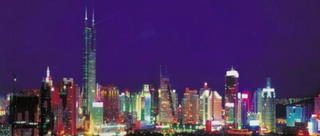
9. Shenzhen, China
What was a tiny fishing village on the border of Hong Kong in 1970 is now a buzzing metropolis of over four million people. With 13 buildings at over 200 meters tall, including the Shun Hing Square (the 8th tallest building in the world), Shenzen is a marvel of lights after sunset. You can’t help but ask yourself if you are in a video game or in a real city.Metro/Urban Population: 4.2 million


10. Seoul, South Korea
This city's skyscrapers are divided into many clusters, spread amongst the main businesses and residential districts. Most of the recent growth in Seoul's skyline, however, has been of residential towers over 60 storeys high that are shooting up like blades of grass! There are 10 buildings in Seoul over 200 meters tall and much of the mid-rise to high-rise structures are lined up in a linear fashion, creating a "wall" of buildings like no other. Seoul is where the ancient Eastern world meets the modern West. Metro/Urban Population: 20.8 million


11. Sao Paolo, Brazil
“What building did you say they lived in?” Finding it in the largest mass of condensed apartment buildings anywhere would be like finding a needle in a haystack. Sao Paolo has a population of over 18 million people! While the buildings are not super tall (with only a single structure at over 200 meters tall) this skyline is nevertheless stacked. Sao Paolo has a fleet of over 500 helicopters, the second largest helicopter fleet in the world.Metro/Urban Population: 18.3 million


12. Sydney, Australia
Australia’s showcase city, Sydney has one of the most recognizable skylines due to its world-famous harbour, often referred to as the most beautiful natural harbour in the world. The Sydney Harbour has many bays, inlets and secondary harbours. It is spanned by the monumental Harbour Bridge, and the Opera House decorates the shoreline like a white flower. The Sydney skyline is world-class with hundreds of skyscrapers in the central business district and many more high-rise buildings in the outlying neighbourhoods. Sydney has 8 buildings over 200 metres tall.Metro/Urban Population: 4.2 million


13. Frankfurt, Germany
Certainly one of Europe's most interesting cities in terms of skylines, Frankfurt is home to five structures that are over 200 metres tall. These modern skyscrapers are marvels compared to those other, mostly non-existent ones scattered across European cities. The contrast here is interesting: The city combines low-rise, high-density traditional European architecture (some of which is over 1,000 years old), with modern towers that stick out like sore thumbs, but are impressive nonetheless.Metro/Urban Population: 4.1 million


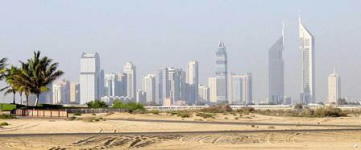
14. Dubai, United Arab, Emerites
Is this a mirage in the Middle East? Seemingly out of nowhere emerges a city in the middle of a desert. This is Dubai, a city that produces only the best modern architecture in the world. Already home of the world's tallest all-hotel building and the tallest all-residential building in the world, AND currently proposed to build the world's tallest building, this skyline might just leap to the number 1 spot in the near future. While the skyline is not so dense, each building is a marvel all on its own. As a skyline it probably can't compete with the larger cities, however the individual buildings in this city are by far the greatest examples of modern architectural accomplishments. All seven structures in this city at over 200 metres tall were built in 1999 or later - that's how new this city is.Metro/Urban Population: 1.6 million


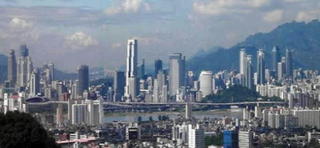
15. Guangzhou, China
Guangzhou is a very modern city, yet it is called "the City of Flowers,” as each of its spectacular skyscrapers is surrounded by grand green spaces and flower beds. Although it only has four structures at over 200 metres tall, there are plenty of other high-rises, each displaying a design that stands out in its own respect. This includes the 391 metre, 80-floor, CITIC Plaza which appears transparent against the (usually) clear blue sky!Metro/Urban Population: 4.1 million

Tuesday, August 23, 2005

Why Employees Leave Companies?

I read this article from a website and I found it interesting. Most people think money is the main reason but read it on and you will find that it is not the main reason...

Retaining key employees is now the number one problem for corporations. With unemployment rates going toward all-time lows, attracting and holding top talent is a serious concern. After 20 years of down-sizing, it may seem ironic that corporations are now in a panic about losing employees.

Training professionals, managers and CEO's are all searching for what they can do to keep their good, talented employees. Particularly hard-hit has been the high-tech industry, which reports turnover rates as high as 30 percent.

Organizations are turning to retention bonuses to attract and retain talented people, some say as high as $20,000. There are also reports of an amazing array of perks and benefits being offered to make employees' lives more comfortable. Some organizations offer dry-cleaning services, car-detailing, concierge services to run errands, child-care, pet-sitting, gym programs, and chair massages.

But you can't buy love. Throwing money or gifts at people isn't enough to keep them. If they don't like the company, the people they work with, the boss orthe way that they're treated, they will still leave.

Finding solutions to employee retention means more profitable companies, happier, more productive employees, and more satisfied customers.

Losing employees is very expensive. Studies have found that the cost of replacing lost talent is 70 to 200 percent of that person's annual salary. Expenses include recruiting, orientation and training, lost productivity during that period, even lost customer satisfaction because of the change. Finding and training the best employees is a major investment.

What can a company do, once they have found talented people, given them valuable training and equipped them, to prevent them from walking out the back door and going to competitors?
Study after study shows that people leave because of their direct supervisors, more so than any other reason. It is the manager who more than anyone else can do something about retaining workers. The manager can be seen as responsible for creating a satisfactory working environment.

However, studies also show that 9 out of 10 managers think people stay or go because of money (Harvard Management Update, June 1988.) This keeps showing up in research, in spite of the fact that people leaving jobs say otherwise. Money and perks matter, but employees report that what they want most is challenging, meaningful work, a good boss, and an opportunity for learning and development.

In 1999 the Hay Group studied more than 500,000 employees in 300 companies. They found that of 50 retention factors, pay was the least important. Other studies bring up similar lists of the 10 most important reasons people want to stay with a company.

1. Career growth, learning and development
2. Exciting, challenging work
3. Meaningful work, ability to make a difference and a contribution
4. Great people
5. Being part of a team
6. Good boss
7. Recognition for work well done
8. Autonomy, a sense of control over one's work
9. Flexible hours and dress
10. Fair pay and benefits

This is contingent upon people having already attained a certain level of material comfort. That is, once people have their basic needs met, they care more about what they do and who they work with, rather than the money.

So why do managers still think it's the money? Do they view people as important capital assets, or as easily replaced? Do they nurture, respect and protect their workers? Or are they looking at them only as performers? Diagnosing the gaps in espoused theory and theory in action is important in putting retention efforts in the hands of managers who are most closely working with the employees and who can make the difference.

One possible explanation why managers still think it's the money may be thatwhen employees complain to them, they often bring up the subject of compensation. Workers come to their bosses when they want a raise. They may feel they are not earning enough, or as much as another person. When these concerns are frequently verbalized to managers it gives them the impression that money is what matters the most.

A 1999 study by the Saratoga Institute for the American Management Association cites three reasons people leave their jobs:

1. Poor supervisor skills
2. No growth opportunities
3. Inability to speak freely

Some of the most comprehensive research on what makes a great company has been done by the Gallup Organization. In 1999 they published the results of a meta-survey of over 1 million employees. This information is invaluable and is contained in the book, "First Break All the Rules: What the World's Greatest Managers Do Differently" by Marcus Buckingham and Curt Coffman (Simon & Schuster, 1999).

Based on a wealth of data, the Gallup Organization attempted to define not only what makes a great company, but because so much depends upon it, what makes a great manager.

In today's tight labor markets, companies compete to find and keep the best employees, using pay, benefits, promotions, impressive job titles and training. But these well-intentioned efforts miss the mark. The most important element in attracting and retaining key employees is the front-line manager.

The Gallup study found that people weren't necessarily loyal to the company, but rather to the unit they worked in, and this was because of their feelings toward their immediate supervisor. In other words, companies aren't employers-of-choice, but rather supervisors are the essential factors in retaining talented people.

No matter how generous its pay, benefits or training, a company that lacks great supervisors and managers will suffer. Great managers, according to the Gallup research, have the following behaviors that set them apart from others:

1. They select an employee for talent rather than for skills or experience.
2. They set clear expectations and define the right outcomes rather than the right steps.
3. They motivate people, by building on their strengths rather than trying to fix their weaknesses.
4. As each employee grows, they encourage them to find the right fit for their strengths within the organization.

It is worthwhile to examine four of the elements that have been proven to be effective in creating employee loyalty: praise and recognition, a sense of contribution to the company, learning and development, and having a best friend at work.

1. Praise and recognition: It has been said that no news is good news, but for managers interested in keeping the best workers, this is not true. For workers, not getting any feedback is tantamount to being ignored: it leads to complacency. Workplaces that ignore performance will destroy the very human spirit that makes the true difference in quality output and service delivery.

Positive recognition is often thought of as coming strictly from supervisors or managers, but studies have found that employees really value praise and recognition from peers. Co-workers know the particulars of a job and when they give good feedback it can be more meaningful.
What can a manager do to help foster this? Model the appropriate way to give frequent praise and recognition. Work with your coach to help develop your feedback skills.

2. A sense of contribution to the company: Excellence only happens when people have a deeply felt sense of purpose in their lives. Human beings want to know they make a difference. Organizations need to let employees know how their job and their performance is important to the overall success of the company. There must be an alignment of the worker's personal reasons for being there and the purpose of the job. It is more exciting to share a mission rather than to simply accomplish a task.

What can a manager do to increase this sense of meaning? Involve the workers in other aspects of the company. Take them to meetings, let them know about what's going on in the company in other departments and teams.

3. Learning and development: It is important to offer trainings and learning opportunities. Traditional management highlights the need to help employees identify their weaknesses and then creates a plan for them to improve. The emphasis is on what the employee is not, rather than on developing more of who they are. Effective organizations are now hiring coaches to help workers develop their strengths and to become more of who they are.

Working with a coach involves holding up a mirror to employees and encouraging them to know themselves. As they come to better understand who they are, they can see opportunities for growth in the company, utilizing their strengths and talents. As they move forward in their self-knowledge, they can look for places within the company where their talents are a good fit.

4. Having a best friend at work: This is a key element in why people choose to stay at a job, even in the face of other dissatisfactions. In the best workplaces, managers recognize that employees want to forge quality relationships with their co-workers and that company loyalty can be built from such relationships. Developing trusting relationships with one's coworkers provides a significant emotional compensation for employees. While organizations pay close attention to the loyalty workers may feel toward the company, the best employers recognize that loyalty also exists among workers to each other. Great managers allow time and opportunity for these relationships to flourish.

Managers know that they need to attract and retain talented people in order to succeed in the competitive workplace. And they also have to find ways to get workers to improve performance. People usually don't think of themselves as performers, but as individuals with certain strengths and talents. Workers must know that the manager cares about them on a human level before they are going to be motivated to make extra efforts.

There is no one-size-fits all retention formula. Here are some of the ingredients:1. Honest communications in all directions2. Supervisors who invite workers into all facets of work and help them to see the big picture, that is, the corporate value of their contributions3. Workplaces that encourage experimentation and learning.

There are no new tricks. It is the same old story: there is a great need to engage and enable the hearts, minds, and yes, even the soul of people at work. This engagement is far more important than bonuses, perks and even chair massages. It is primordial to retaining talented people.

So, after you have read this article, what do you think?
Sunday, July 31, 2005

Very Strange Facts! But Interesting To Know

Most lipstick contains fish scales

Coca-Cola was originally green.

The "sixth sick sheik's sixth sheep's sick" is said to be the toughest tongue twister in the English language.

The most common name in the world is Mohammed.

The name of all the continents end with the same letter that they start with.

The strongest muscle in the body is the tongue.

TYPEWRITER is the longest word that can be made using the letters only on one row of the keyboard.

Women blink nearly twice as much as men.

You can't kill yourself by holding your breath.

It is impossible to lick your elbow.

People say "Bless you" when you sneeze because when you sneeze, your heart stops for a millisecond.

It is physically impossible for pigs to look up into the sky.

If you sneeze too hard, you can fracture a rib. If you try to suppress a sneeze, you can rupture a blood vessel in your head or neck and die.

If a statue of a person in the park on a horse has both front legs in the air, the person died in battle. If the horse has one front leg in the air, the person died as a result of wounds received in battle. If the horse has all four legs on the ground, the person died of natural causes.

Honey is the only food that doesn't spoil.

A snail can sleep for three years.

All polar bears are left handed.

Butterflies taste with their feet.

Elephants are the only animals that can't jump.

On average, people fear spiders more than they do death.

The ant always falls over on its right side when intoxicated.

The electric chair was invented by a dentist.

The human heart creates enough pressure when it pumps out to the body to squirt blood 30 feet.

Rats multiply so quickly that in 18 months, two rats could have over million descendants.

Wearing headphones for just an hour will increase the bacteria in your ear by 700 times.

Wednesday, July 20, 2005

Catch This Exciting Facts

We asked more than 250 PC World readers about a raft of tech annoyances. These are the worst, rated on a scale of 1 (not annoying) to 7 (extremely annoying).
1. Sites that hijack your browser home page: 6.87
2. Downloads that come with spyware: 6.80
3. Services you can't unsubscribe from: 6.60
4. Viagra/prescription-drug spam: 6.54
5. Animated ads blocking out a Web page: 6.52
6. Pornographic spam: 6.50
7. Pop-up/pop-under ads: 6.47
8. Nigerian scam spam: 6.31
9. Overpriced printer ink: 6.18
10. All the work required to get a rebate: 6.10
11. (tie) RealPlayer marketing tactics; cryptic error text: 5.97
(PC World magazine October 2004)